
English| EUR
Suggested for you
More currencies
Choose a language
Stavanger sits on Norway's southwestern coast, where the Gulf Stream moderates temperatures more than inland regions. The Lysefjord area receives snow during winter months, though patterns differ significantly from Norway's Arctic zone. Understanding the timing and intensity helps you pack correctly and plan activities around conditions on the water and surrounding plateaus.
Quick answer
Yes, snow falls in the Stavanger and Lysefjord region, primarily between December and March. Coastal areas around Stavanger itself see intermittent snow that often melts quickly due to maritime influence, while the Lysefjord plateau and higher elevations maintain more consistent snow cover. January and February bring the most reliable conditions, with temperatures hovering near freezing and accumulation averaging 20–40 centimeters in elevated areas.
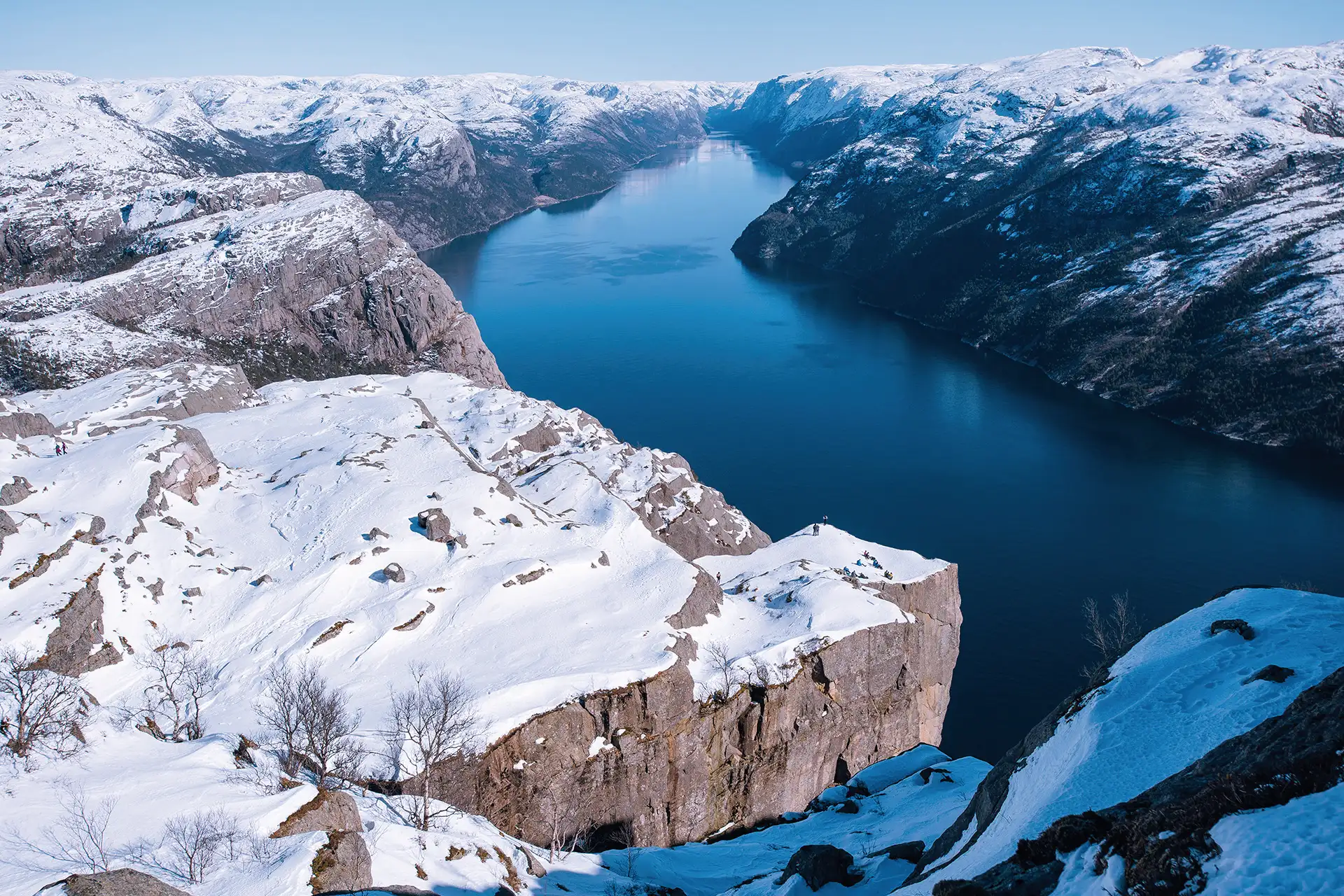
Stavanger records an average of 20–30 snowy days per winter, concentrated in the three-month window from late December through February. The city itself sits at sea level, where salt air and Gulf Stream currents keep daytime temperatures between -2°C and 4°C during peak winter. Snow arrives in bursts, blanketing streets and docks for a day or two before rain washes it clear. The Lysefjord plateau, by contrast, sits 600 meters higher and holds snow far longer. The question of whether it snows in Stavanger Norway hinges on distinguishing the coastal strip from the inland fjord landscape. Preikestolen and the cliffs ringing Lysefjord accumulate persistent snow from January onward, transforming hiking routes into winter-only terrain that requires crampons and route knowledge. Ferries continue service year-round, but deck views shift from green moorland to white ridgelines under low winter sun. March marks the transitional month, when coastal snow becomes rare but higher elevations retain cover into early April. Visitors arriving in late autumn or early spring encounter unpredictable conditions—rain one day, snow squalls the next. The Lysefjord area remains accessible throughout winter, with road access kept clear to Forsand and ferry docks operational in all but the most severe storms. Winter daylight runs short, with roughly six hours of usable light in December, extending to nine by late February. Norwegian meteorological records show Stavanger's snowfall has declined slightly over the past two decades, but the region still delivers reliable winter conditions for those prepared for coastal volatility. The fjord itself rarely freezes, maintaining deep blue water beneath snow-draped cliffs. Pack layered waterproofs, insulated boots, and expect both rain and snow during any winter visit.
“The Lysefjord plateau sits 600 meters higher and holds snow far longer than the coastal strip below.”
The best time to visit the Lysefjord area is from May through September, as coastal Stavanger temperatures remain mild while snow persists on high-altitude viewpoints during winter months.
Mild temperatures, little snow
This period offers the most reliable access to higher fjord viewpoints without snow interference.
Frequent rain and high-altitude snow
Snow is transient in Stavanger but often covers trails at higher elevations near the fjord.
—
Arriving between 08:00 and 12:00 provides optimal daylight and reduces the risk of encountering thick fjord fog.
Verdict: The best time to visit is during the shoulder months of May or September, specifically arriving between 08:00 and 12:00 on weekdays to avoid snow-covered high trails and peak congestion.
Fjord weather differs sharply from city conditions, so layer appropriately and prepare for wet terrain.
Lysefjord is located in the Ryfylke region, accessible from Stavanger via road and water connections. During winter months, transport providers frequently adjust schedules to account for snow and ice, requiring passengers to monitor service updates closely.
Kolumbus Line 470 from Stavanger to Forsand
Rv13 toward Forsand and Lysefjord
Fjord cruise departing Stavanger city center
Plan your travel within the best arrival window of 08:00–12:00 to ensure optimal daylight and reduced risk of fog. Always check current road status for the 4110 Forsand area before departure, as winter conditions may affect local access.
The Lysefjord area remains accessible to the public at all times, providing open access throughout the year.
Everything you need to know about does it snow in stavanger norway
Stavanger experiences maritime winter weather where temperatures often hover near freezing, meaning snow is possible but does not always accumulate for long periods. Coastal winds and the Gulf Stream moderate the climate, though inland areas like Lysefjord can see more consistent snowfall.
Visitors aiming for optimal conditions should aim for the 08:00–12:00 window to enjoy the best daylight hours and reduced fog. This timeframe remains recommended regardless of the season to ensure a clear view of the surrounding mountain landscape.
The Lysefjord area remains accessible year-round with no entrance fee of 0 NOK. While general access is permitted 24 hours a day, travelers should verify specific tour operator schedules for boat or hiking transport.
Snowfall in the city center is unpredictable, as it often transitions between rain, sleet, and snow due to the proximity to the North Sea. It is common for does it snow in stavanger norway residents to experience mild winters compared to the mountainous interior.
Guests should dress in layers to account for shifting weather patterns, including waterproof gear and sturdy footwear for uneven terrain. Because does it snow in stavanger norway conditions change rapidly, checking local forecasts before departing for the fjord is essential.
Heavy snowfall can occasionally impact mountain passes, though main roads are prioritized for clearing. It is rare for the region to shut down entirely, but travelers should remain flexible with their itinerary.
While the fjord itself rarely freezes, ice or heavy snow can influence tour departures and visibility for fjord sightseeing cruises. Operators manage schedules based on safety, so confirm your status before traveling.
High-altitude hikes, such as the path to Preikestolen, often feature snow from late autumn through spring. Does it snow in stavanger norway is a frequent question for hikers, but the trail conditions at the fjord summit are often much harsher than at sea level.
Stavanger Fjord Cruise Price
Read more GuideIs Stavanger Worth Visiting?
Read more Tickets & toursElectric Fjord Cruises
Read more GuideTraveling Between Stavanger and Bergen
Read more Tickets & toursLysefjord & Pulpit Rock Cruises
Read more Tickets & toursStavanger Fjord Day Trips
Read more